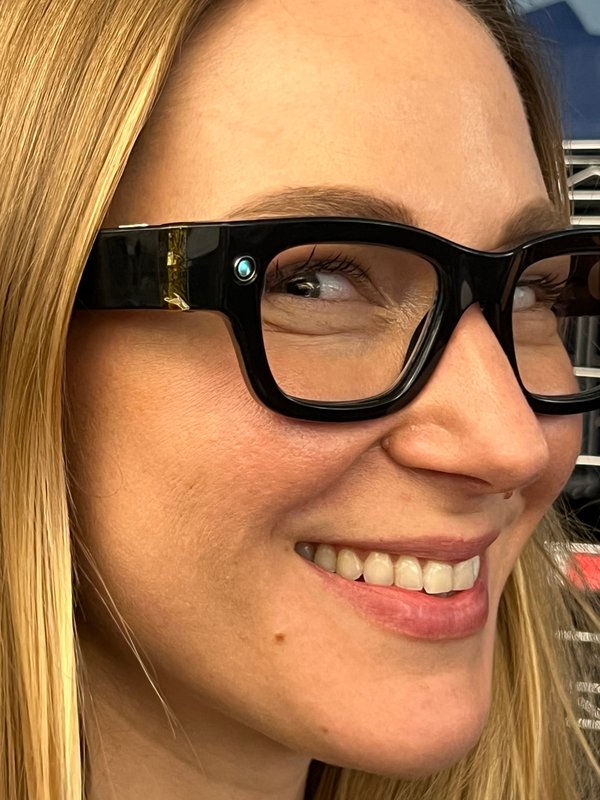
For most of my career I've worked at the leading edge of whatever technology was reshaping an industry: moving steel into Europe's wind-power market, putting robots on warehouse floors, helping people live with AI on their faces, reshaping how they discover things to do nearby. The industries couldn't look more different. The constant is the human underneath: what people actually need, what they'll trust, and what makes their experience genuinely better. That's the thread through all of it, and the apps are where it lives now.
Dec 2021 – 2026
Meta
Two chapters: building the smart glasses, then reshaping how people find things to do
Smart glasses · Burlingame, CA
Partnerships Manager. Negotiated and closed the EssilorLuxottica marketing addendum, the most significant partnership deal of the program, shaping the product, brand, and distribution terms behind the Ray-Ban Meta AI glasses.
Product Manager, Meta Wearables app. Owned user education and onboarding for multimodal AI: voice, vision, music, photography. The work lived in the MetaView app, which later became the Meta AI app. Built the Smart Glasses 2P Experiences area from scratch, won VP sponsorship and funding, and shipped integrations with Amazon Music, Calm, and Spotify ahead of Meta Connect 2024.
Facebook Events & Local · Menlo Park, CA
One job, three acts. First I modernized Events with AI, detecting events buried in posts and reels and turning them into real Facebook events, so people found them through active discovery instead of luck.
Then I built out Local: restaurants, bars, and outdoor plans like nature hikes, reframing the product around how people spend their time outside the home.
Finally, the things-to-do map: my last project at Meta, redesigning how a map surfaces the events, places, and gatherings worth leaving the house for.
2020 – 2021
Into AI robotics
The move from heavy industry into startups
Vicarious AI, California. Early use-case discovery with Fortune 500 companies, finding where AI-driven robotics genuinely solved a problem, and where it didn’t.
Kindred AI, San Francisco. Led partnerships and deployments for reinforcement-learning and computer-vision robotics under a Robot-as-a-Service model, and was a core partner to the CEO and CFO through acquisition due diligence, running the analysis that informed valuation, de-risked the deal, and fed a successful sale.
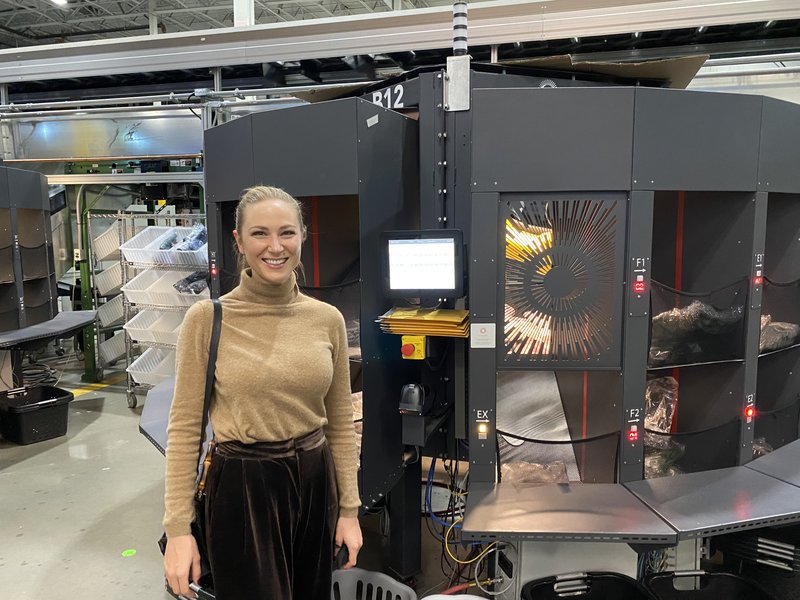
On the warehouse floor with Kindred’s robotic sorting system.
2009 – 2019
A decade in global trade & manufacturing
Heavy industry and new technology, across China, Germany, and California
Flex, San Jose, California. Senior Manager, Strategic Partnerships at one of the world’s largest electronics manufacturers. Started a robotics initiative that spanned continents and built the strategic and financial model for a $12B retail-automation opportunity, working alongside computer-vision, NLP, and ML startups.
CITIC Group, Düsseldorf, Germany. Moved heavy-industry steel into Europe’s offshore wind-power and petroleum markets, generating $220M in revenue.
Global steel trade, Beijing, China. Managed supplier relationships and cross-border trade across China, Europe, and the US.
Education
Columbia UniversityMBA
Kyiv National UniversityBA, International Relations & Foreign Policy
How I work & what I care about
A few things that are true across everything I make.
From idea to launch, on my own.
I used to steer the build — setting direction, leading engineers and designers, owning the trade-offs and the priorities. Now I do all of it myself: strategy, design, copy, and the actual build, from concept to launch. The toolkit is Claude and Lovable, and that's really it. I taught myself to work this way in a matter of months, with no team behind me — it's me and the AI.
Good judgment under ambiguity.
My favorite work lives where the answer isn't obvious: defining what "good" means, where to set the quality bar, what the failure modes are, and how much to show the user when the system isn't sure.
Ethical clarity, on purpose.
I don't ship streaks, shame, or manipulation. I'd rather a product say less and earn trust than say more and burn it. That's a design constraint I hold deliberately.
Human first, novelty second.
New tech is only interesting to me when it actually helps a person do something they care about, and does it calmly, clearly, and with respect for their time and attention.
A few languages, picked up along the way: English, Mandarin, German, Italian, Russian, Ukrainian, Spanish, and (currently learning) Portuguese, which is the whole reason I'm building Fala in the first place.